The blue logo of MacVector, inc.
  • Getting Started
    • What can MacVector do for my lab?
    • Overview
    • Sequence Assembly
    • Common workflows for the molecular biologist
    • Comparing sequences
    • Getting your sequence into MacVector
    • Importing sequences
    • Where to start
    • Primer design
    • Tutorials
  • Free Trial
  • Pricing
    • Pricing
    • Purchase online
    • Student and Postdoc licenses
    • What type of license should I buy?
      • MacVector Free
      • Maintenance
    • Quote Request
      • CeresBio
      • VtR Incorporated
      • VtR Incorporated
  • Support
    • Legal Information
    • Compatibility of older versions
    • Privacy and Security Policy
    • Downloads
    • InstallersInstallers of the current version of MacVector and older ones.
    • System Requirements
    • Tutorials
    • What’s New in MacVector.
    • Weekly Tips
  • Contact us
    • Email Options
  • Blog
    • Archives
    • Press releases
    • Testimonials
    • Weekly Tips

  • Importing SnapGene files into MacVector

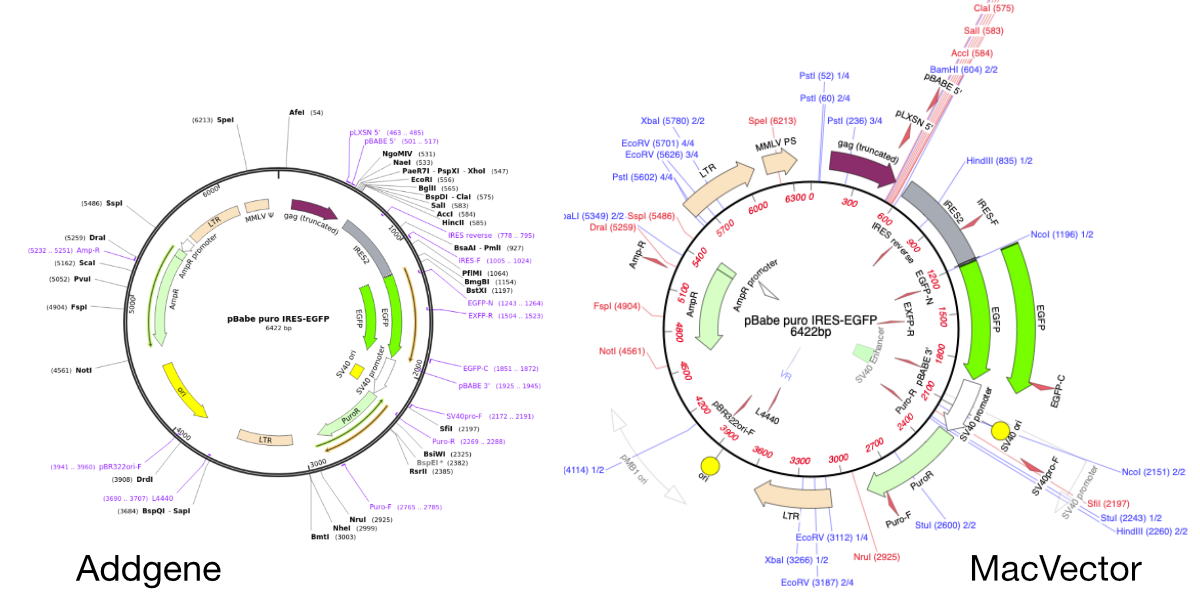
    MacVector will directly import SnapGene DNA files. You just need to use FILE | OPEN or double click the file. This is very useful when downloading plasmid sequences from the wonderful Addgene plasmid repository. Here’s a plasmid sequence downloaded from the Addgene website in Snapgene format. It’s been opened directly in MacVector by double clicking…

    Read more: Importing SnapGene files into MacVector
    Oct 13, 2021

    —

    by

    Chris
    in Tips

  • MacVector Tip: a complex subsequence pattern example.

    MacVector’s Subsequence tools allows you to search for motifs in both protein and DNA sequences. As well as a library of existing subsequence files, such as promotors and transcription factor binding sites, you can keep a library of your own subsequence matches. Subsequences libraries are multiple patterns kept in a single file. A search will…

    Read more: MacVector Tip: a complex subsequence pattern example.
    Aug 18, 2021

    —

    by

    Chris
    in Tips

  • Applescript: batch translation of CDS features

    Apple’s AppleScript (along with Javascript for Automation) is an easy to write and easy to understand language that allows you to easily automate tasks in supported applications. Many Apple applications have a AppleScript Dictionary that defines what functions you can automate. MacVector has many such functions in its AppleScript Dictionary. You can auto annotate multiple…

    Read more: Applescript: batch translation of CDS features
    May 19, 2021

    —

    by

    Chris
    in Techniques, Tips

  • MacVectorTip: Context-sensitive Menus in MacVector

    Although Apple are well known (notorious?) for always providing mice with only a single obvious button, in reality the Mac interface from early versions of MacOS all the way to macOS Big Sur, plus many Mac apps, have always used right click menus (or more accurately “context sensitive menus”) to provide extra functionality. MacVector is…

    Read more: MacVectorTip: Context-sensitive Menus in MacVector
    Apr 28, 2021

    —

    by

    Chris
    in Tips

  • MacVectorTip: Viewing genotype changes in Align to Reference assemblies

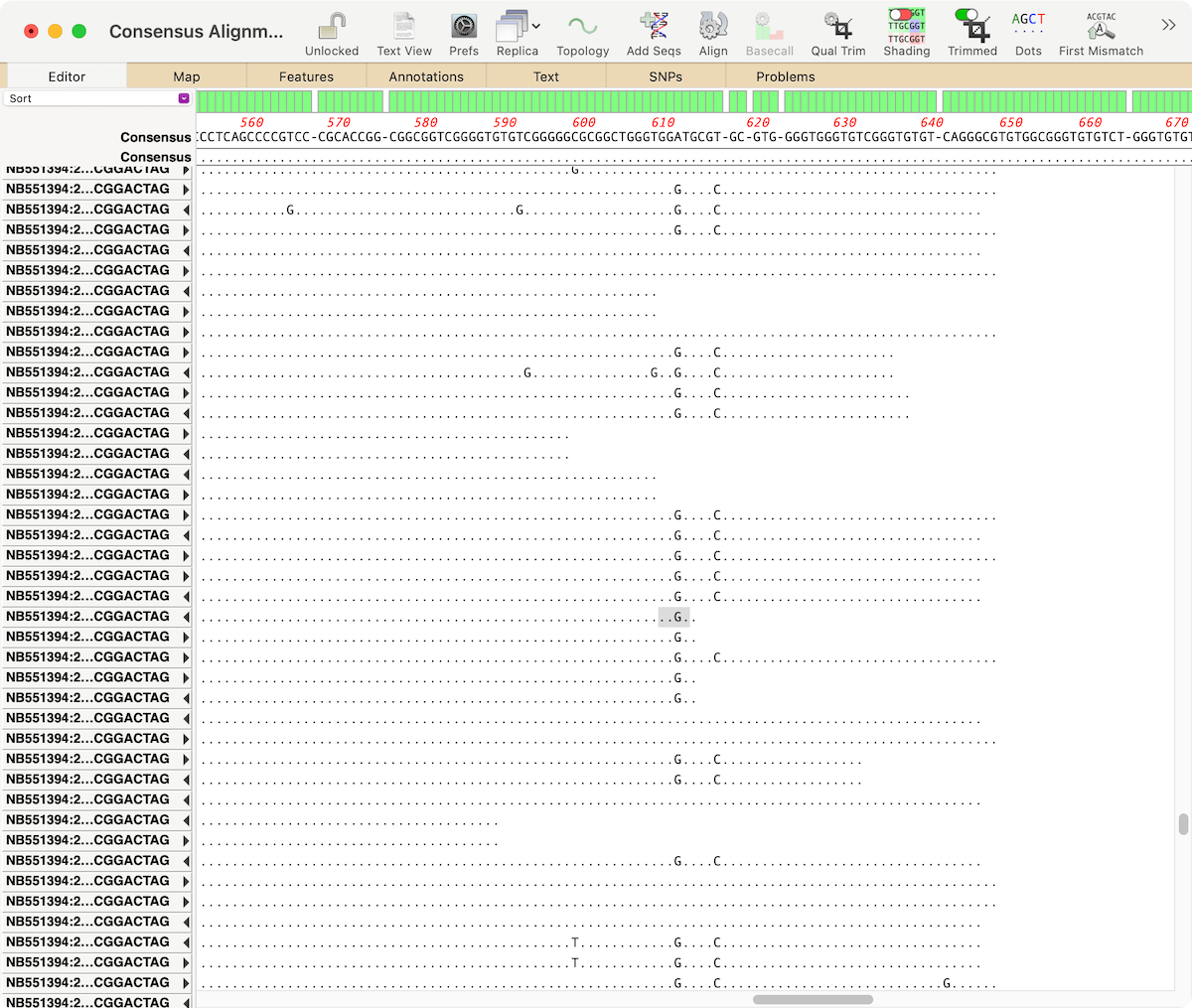
    The latest releases of MacVector, MacVector 18.0.1 (Intel) and MacVector 18.1.1 (Intel and Apple Silicon) have some tweaks to the output of the SNPs tab in the Align to Reference assembly window. The genotypes of any SNP changes now follow a consistent standard, and short deletions are also reported. If the region containing the nucleotide…

    Read more: MacVectorTip: Viewing genotype changes in Align to Reference assemblies
    Mar 10, 2021

    —

    by

    Chris
    in Releases, Techniques, Tips

  • CRISPR tools in MacVector

    If you are using CRISPR editing techniques then there are two useful functions in MacVector for you: Finding CRISPR Cas9 PAM sites. You can also use Scan DNA FOR.. tool to automatically show sites on all sequences. Screening sequences for CRISPR introduced INDELS

    Read more: CRISPR tools in MacVector
    Jan 6, 2021

    —

    by

    Chris
    in Releases, Techniques, Tips

  • Working From Home: An overview of primer design workflows in MacVector.

    Working from home?. We want to help familiarize you with the wide range of functionality in MacVector that you may never have used before. Here’s an overview of workflows for designing, testing, documenting and storing primers. You may not have a PCR machine on the kitchen table, but why not take the time to store…

    Read more: Working From Home: An overview of primer design workflows in MacVector.
    Apr 16, 2020

    —

    by

    Chris
    in Techniques, Tips, Tutorials

  • Working from home: An overview of assembling sequence data with MacVector and Assembler

    Working from home Here’s a series of blog posts on the wide range of functionality in MacVector that you may never have used before. This is an overview of the many different sequence assembly tools within MacVector. The MacVector team used these tools to mine existing sequencing archives to assemble a new Pangolin SARS-CoV–2 genome. To…

    Read more: Working from home: An overview of assembling sequence data with MacVector and Assembler
    Apr 16, 2020

    —

    by

    Chris
    in Tips

  • Accessing video tutorials of common workflows inside MacVector

    During the Covid-19 pandemic we want to ensure that you have access to the MacVector license that you would use in the lab, if you are working from home. If you use MacVector, even an older version, and are having trouble activating it (or installing it) at home email MacVector Support and we will help. If you…
    Read more: Accessing video tutorials of common workflows inside MacVector
    Apr 9, 2020

    —

    by

    Chris
    in Tips

  • Working from home – Getting your sequence into MacVector

    During the Covid-19 pandemic we want to ensure that you have access to the MacVector license that you would use in the lab, if you are working from home. If you use MacVector, even an older version, and are having trouble activating it (or installing it) at home email MacVector Support and we will help. If you…
    Read more: Working from home – Getting your sequence into MacVector
    Apr 2, 2020

    —

    by

    Chris
    in Tips
←Previous Page
1 … 5 6 7 8 9 … 28
Next Page→

Workflows

  • Primer Design
  • Cloning
  • Sequence Assembly
  • CRISPR
  • Gibson Assembly

Assembly

  • Sequence Assembly
  • Genome finishing
  • Comparison with Sequencher

Resources

  • Privacy Policy
  • What’s New
  • Testimonials
  • Downloads

Support

  • Compatibility
  • Contact us
  • Importing sequences
  • Support

Social

  • Facebook
  • Instagram
  • Twitter/X

We produce software for the molecular biologist with a Mac!

The blue logo of MacVector, inc.