The blue logo of MacVector, inc.
  • Getting Started
    • What can MacVector do for my lab?
    • Overview
    • Sequence Assembly
    • Common workflows for the molecular biologist
    • Comparing sequences
    • Getting your sequence into MacVector
    • Importing sequences
    • Where to start
    • Primer design
    • Tutorials
  • Free Trial
  • Pricing
    • Pricing
    • Purchase online
    • Student and Postdoc licenses
    • What type of license should I buy?
      • MacVector Free
      • Maintenance
    • Quote Request
      • CeresBio
      • VtR Incorporated
      • VtR Incorporated
  • Support
    • Legal Information
    • Compatibility of older versions
    • Privacy and Security Policy
    • Downloads
    • InstallersInstallers of the current version of MacVector and older ones.
    • System Requirements
    • Tutorials
    • What’s New in MacVector.
    • Weekly Tips
  • Contact us
    • Email Options
  • Blog
    • Archives
    • Press releases
    • Testimonials
    • Weekly Tips

  • 101 things you (maybe) didn’t know about MacVector: #52 – Data mining to identify and analyze pangolin CoV-2 analogs to the human COVID-19 virus

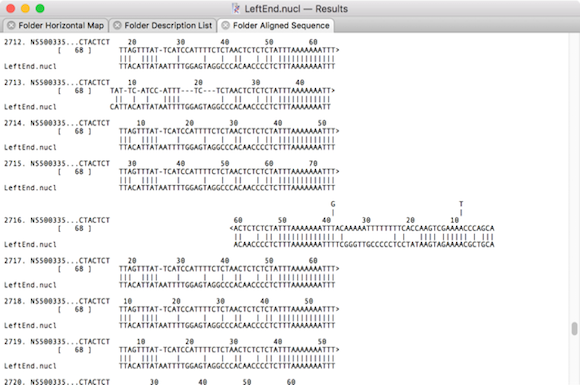
    One of the most underrated features in MacVector is the Database | Align to Folder function. You can use this as a more sensitive version of a local BLAST search to find sequences in a “database” that match a query sequence. But in this case the “database” is simply a collection of your own sequences,…

    Read more: 101 things you (maybe) didn’t know about MacVector: #52 – Data mining to identify and analyze pangolin CoV-2 analogs to the human COVID-19 virus
    Mar 25, 2020

    —

    by

    Kevin
    in 101 Tips, Tips

  • Primer validation with MacVector: Primer3, Covid19 and primer design

    The CDC recently published diagnostic real-time primers for identification of SARS-CoV–2 in any person suspected of having COVID–19. Unfortunately as pointed out on the Biome Informatics blog these primers have issues that should have easily been detected had the primers been tested using a good quality primer testing tool (the linked blog post uses Primer3).…

    Read more: Primer validation with MacVector: Primer3, Covid19 and primer design
    Mar 16, 2020

    —

    by

    Chris
    in Techniques, Tips

  • Importing BAM files into an Assembly Project

    You can import BAM files, containing reads mapped against a reference sequence, into a MacVector Assembly Project. As well as the BAM file(s) you will also need the original reference sequence the reads were mapped against. FASTA is fine, but an annotated reference is better for visualisation. The tool needed is called ADD CONTIG. This…

    Read more: Importing BAM files into an Assembly Project
    Jan 20, 2020

    —

    by

    Chris
    in Tips

  • Calculating the optimal PCR annealing temperature

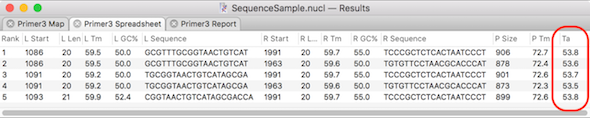
    MacVector has several tools to help with primer design and testing. The Analyze | Primer Design/Test (Pairs) function uses the popular Primer3 algorithm to find suitable pairs of primers to amplify specified segments of DNA. You can also enter pairs of pre-designed primers and test their suitability for use in PCR. In both cases, the…

    Read more: Calculating the optimal PCR annealing temperature
    Jan 10, 2020

    —

    by

    Chris
    in Tips

  • How to copy a specific short amino acid translation of a sequence

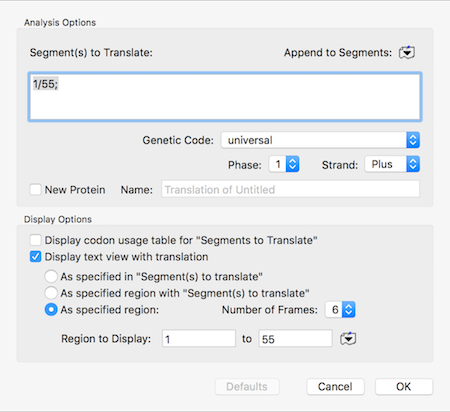
    There can be times when you are messing about with open reading frames, inserting residues to change frames to try to get the perfect CDS fusion. The MacVector single sequence Editor will show those (click and hold on the “Display” toolbar button) but if you select and copy, only the DNA sequence (with any overlapping…

    Read more: How to copy a specific short amino acid translation of a sequence
    Dec 6, 2019

    —

    by

    Chris
    in Techniques, Tips

  • Optimizing Reverse Translations

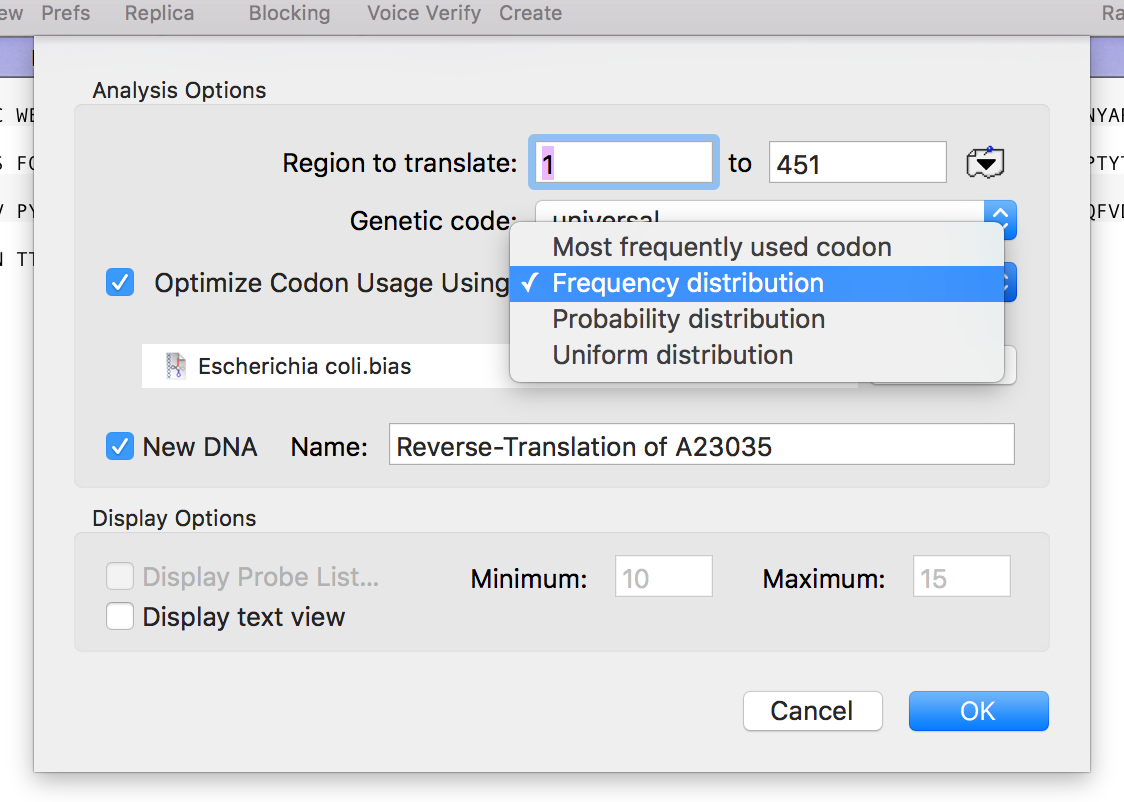
    The Analyze | Reverse Translation menu option lets you create a DNA sequence from a Protein sequence, reverse translated using a specific Genetic Code (by default, the Universal Genetic Code). The default option creates a DNA sequence with N’s and other ambiguities reflecting the degeneracy of the genetic code. This is great if you want…

    Read more: Optimizing Reverse Translations
    Dec 6, 2019

    —

    by

    Chris
    in Tips

  • Use Database | Auto-Annotate Sequence to annotate prokaryotic genomes

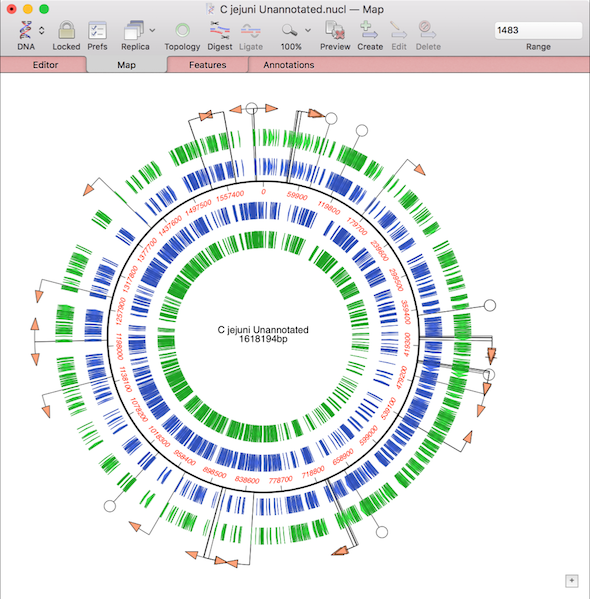
    The continuing advances in Next Generation Sequencing have made it relatively low cost to sequence prokaryotic genomes. Many scientists are embarking on large projects to sequence multiple related genomes. These might be clinical isolates of the same species exhibiting different pathogenetic properties, environmental isolates from different sites, or a study over time of the changes…

    Read more: Use Database | Auto-Annotate Sequence to annotate prokaryotic genomes
    Dec 6, 2019

    —

    by

    Chris
    in Techniques, Tips

  • Which DNA Matrix to use in Align To Folder?

    The Database | Align To Folder function is a very useful tool to find and retrieve similar sequences from folders on your computer or on other local machines. Think of it as your own personal BLAST service. It can not only search individual sequences in any format MacVector can read (MacVector, Genbank, EMBL, ABI etc)…

    Read more: Which DNA Matrix to use in Align To Folder?
    Nov 20, 2019

    —

    by

    Chris
    in Tips

  • Gap closing and genome finishing tools in Align to Reference and Assembler.

    Automated algorithms can only take you so far with genome assembly. The final steps involved in finishing a genome always need manual intervention. MacVector’s various assembly editors have many tools for helping finish genome sequencing projects. For example, closing gaps, extending reference sequences and even automatically circularizing contigs. If you select reads, then right click…

    Read more: Gap closing and genome finishing tools in Align to Reference and Assembler.
    Nov 20, 2019

    —

    by

    Chris
    in Tips

  • Migrating your Vector NTI sequence database to MacVector.

    ThermoFisher (owners of Invitrogen) have announced that Vector NTI Express is nearing the end of its life and Vector NTI Advanced was terminated quite some time ago. If you are looking for an easy to use sequence analysis application, then look for a reliable and trusted application. MacVector is easy to use, has a comprehensive…
    Read more: Migrating your Vector NTI sequence database to MacVector.
    Sep 27, 2019

    —

    by

    Chris
    in General, Tips
←Previous Page
1 … 6 7 8 9 10 … 28
Next Page→

Workflows

  • Primer Design
  • Cloning
  • Sequence Assembly
  • CRISPR
  • Gibson Assembly

Assembly

  • Sequence Assembly
  • Genome finishing
  • Comparison with Sequencher

Resources

  • Privacy Policy
  • What’s New
  • Testimonials
  • Downloads

Support

  • Compatibility
  • Contact us
  • Importing sequences
  • Support

Social

  • Facebook
  • Instagram
  • Twitter/X

We produce software for the molecular biologist with a Mac!

The blue logo of MacVector, inc.