
Tag: screencasts
-
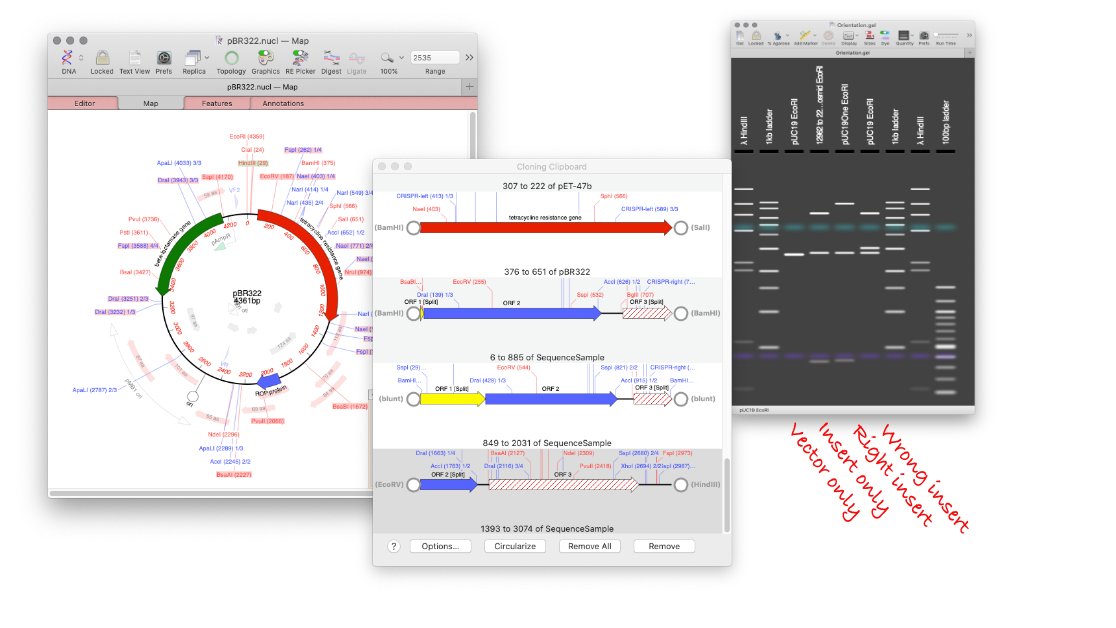
How to design a digest to screen minipreps after a ligation.
MacVector’s Agarose Gel tool can be used to quickly design a restriction digest to screen minipreps following a ligation. Replicate your ligation in MacVector. Create your agarose gel with the correct insert and a vector only lane. Undo the ligation, and repeat with the wrong orientation. Now you will end up with an Agarose Gel…
-
Accessing video tutorials of common workflows inside MacVector
During the Covid-19 pandemic we want to ensure that you have access to the MacVector license that you would use in the lab, if you are working from home. If you use MacVector, even an older version, and are having trouble activating it (or installing it) at home email MacVector Support and we will help. If you…
-
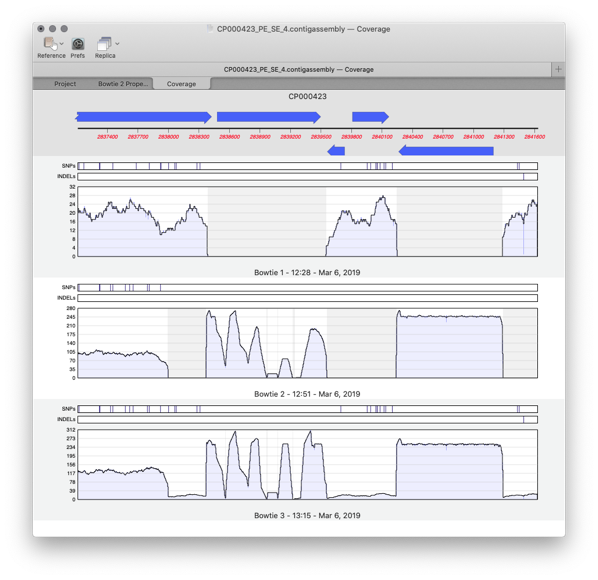
Comparing multiple reference assemblies
MacVector 17 has a greatly improved Assembly Projects manager, for better organization of multiple sequencing datasets, multiple references sequences and repeated jobs. Every time you run a new assembly job (either a reference assembly or de novo). A new job object is created in the Assembly Project window contains resulting contigs and any unaligned reads…
-
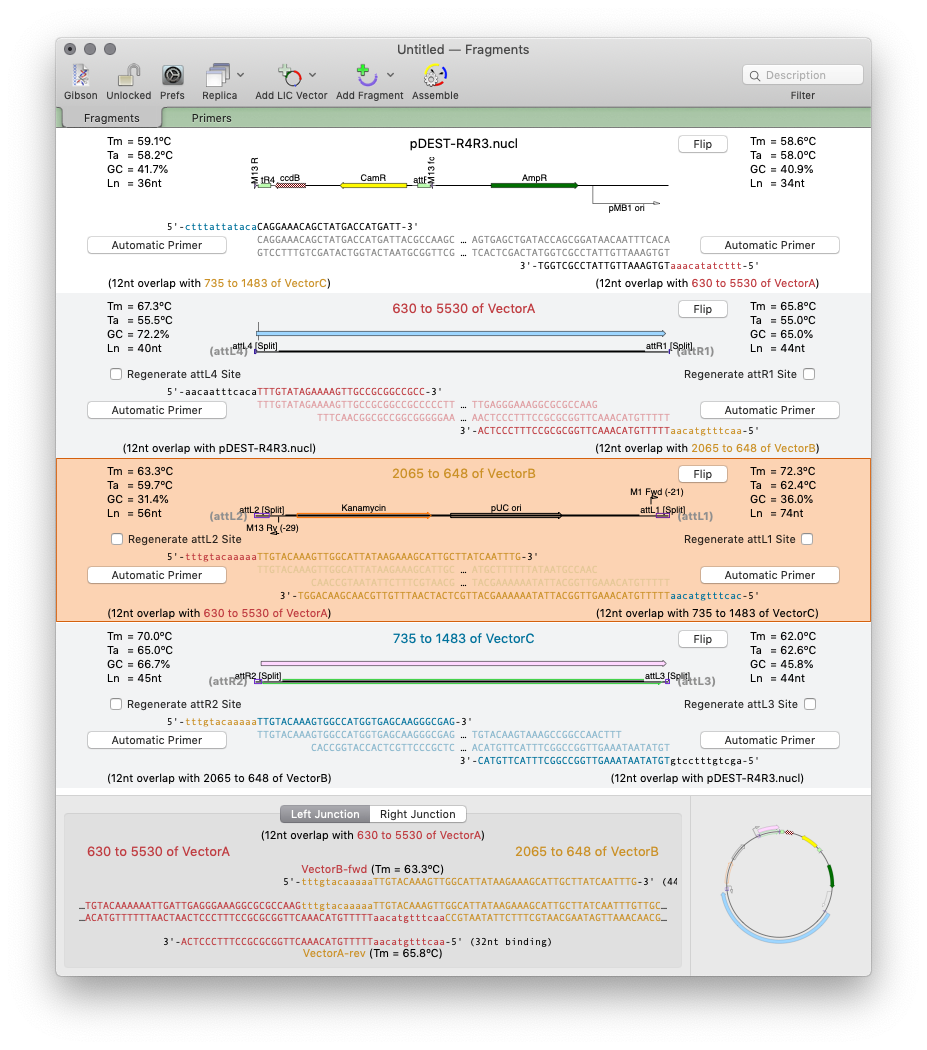
Designing primers for Gibson Assembly with MacVector 17
MacVector 17 has a completely new tool for automated design of ligase-independent cloning strategies. The tool supports 5’ exonuclease driven Gibson assembly as well as the T4 DNA Polymerase 3’ exonuclease “Ligase Independent Cloning” approach. MacVector can automatically design primers when you specify fragments and vectors to use. You can provide custom primers (manually or…
-
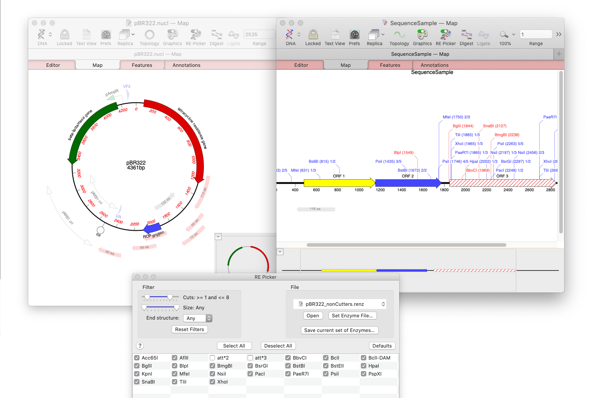
Making restriction enzyme cloning easier with MacVector’s Restriction Enzyme Picker.
MacVector 17’s brand new Restriction Enzyme Picker is a new floating tool for selecting and filtering Restriction Enzymes to simplify the identification of useful enzyme cut sites. It initially presents you with a list of all available sites in a sequence. However, you can filter on many attributes, such as number of cuts, 5’ or…
-
Using MacVector’s Agarose Gel tool to design a digest to screen minipreps after a ligation.
How to design a digest to screen minipreps after a ligation.
-
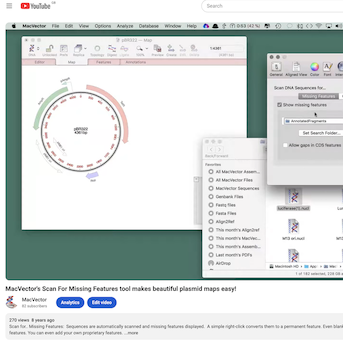
MacVector video tutorials on You Tube
There are short video tips on using MacVector on our blog and our YouTube channel. Each one is less than two minutes and generally shorter than that! Please subscribe so you don’t miss any! The latest screencasts include quickly annotating a gene to a sequence, confirming a small sequencing project against a reference and checking…
-
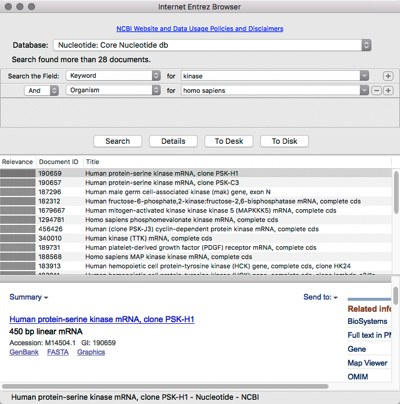
Searching and downloading sequences from Entrez
MacVector has integrated connectivity to the NCBI BLAST and Entrez databases. You can directly search Entrez for DNA or Protein sequences based on features, authors, keywords etc and directly download them into MacVector, complete with all features and annotations.
-
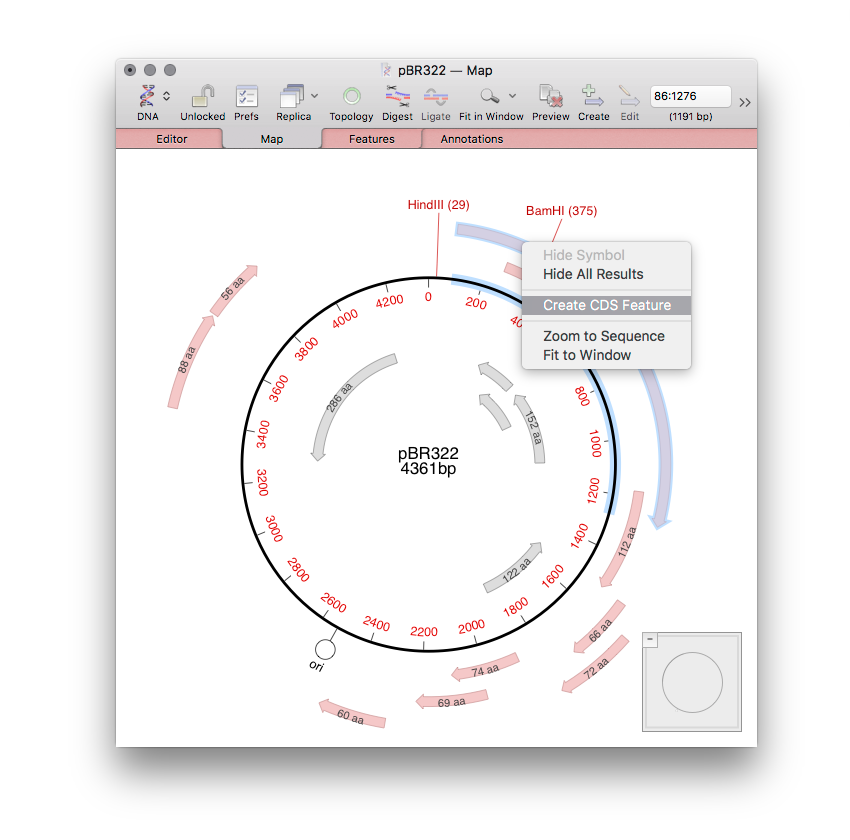
Using MacVector’s Auto Annotate tool to annotate blank sequences.
Have you ever been sent a plain unannotated sequence, or downloaded a sequence from Entrez and been disappointed as it doesn’t have the carefully curated graphical appearance of your favorite genes? Auto annotation solves both of these common problems. The basic idea is that you can scan the sequence against a folder containing a…
-

Adding a primer to MacVector’s Primer Database.
MacVector’s Primer Database tool makes it easy to store your lab’s regular primers. It allows you to save and retrieve primers from the Primer Database from the Primer3 and Quicktest Primer tools. You can also scan sequences for potential primer binding sites. The Primer Database will also store tails and allow you to specify…